Massage in Opfikon near Zurich
Deep tissue massage for chronic tension
More pressure, slower strokes: deep tissue massage works on deeper muscle layers and fascia. Slow, targeted strokes can release even stubborn tension; many describe noticeable relief from chronic complaints.
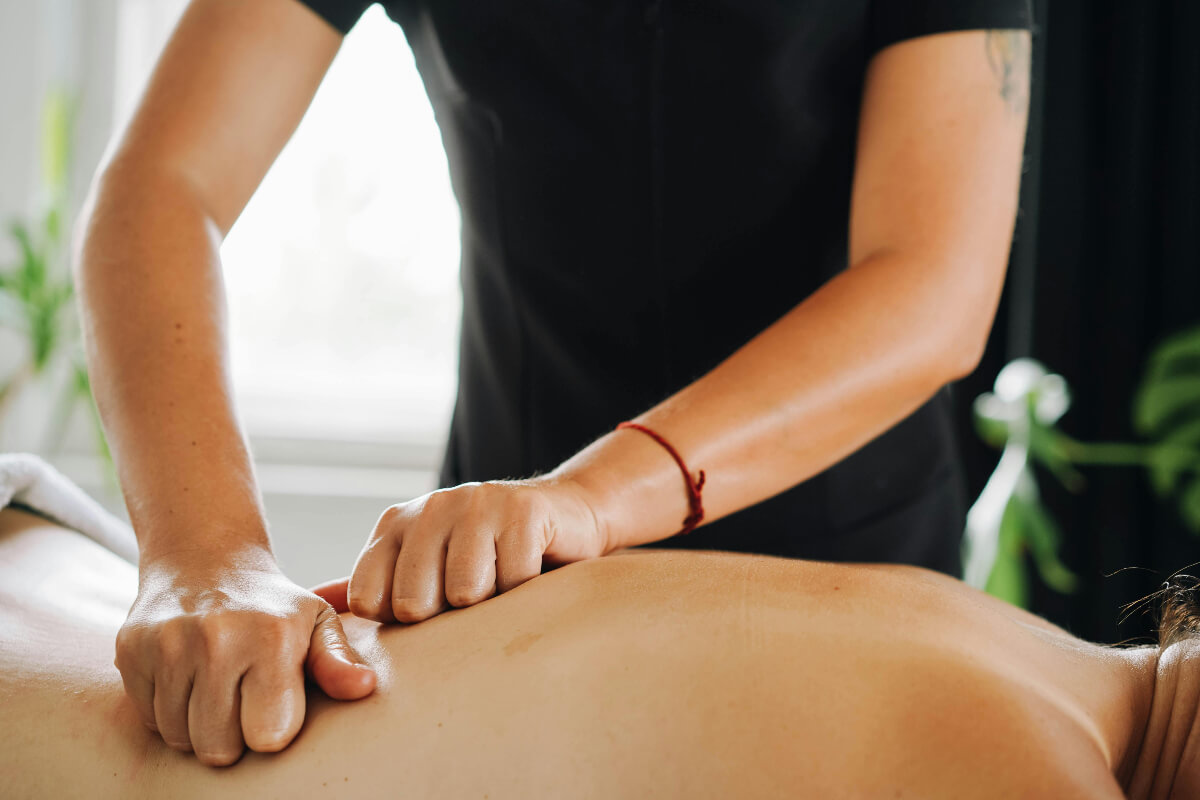
How does deep tissue massage differ?
| Feature | Classic Massage | Deep Tissue Massage |
|---|---|---|
| Pressure intensity | Gentle to moderate | Moderate to intense |
| Target layer | Superficial muscles | Deep muscle layers and fascia |
| Grip technique | Flowing strokes | Slow, targeted pressure work |
| Ideal for | Relaxation, light tension | Chronic complaints, fascial adhesions |
When is deep tissue massage beneficial?
Muscles
Chronic Tension
Tightness that has persisted for weeks or months and does not respond to gentle massage
Fascia
Fascial adhesions
Restricted mobility due to adhesions in connective tissue: typical after lack of exercise
Sport
Athletic demands
Recovery after intense training, muscle soreness, sport-related overload
Neck and shoulders
Neck-shoulder syndrome
Deep tightness in the trapezius and shoulder area from poor posture
Pelvis
SI joint complaints
Pain in the sacroiliac joint area from shortened and tense hip muscles
Recovery
After injuries
Address scar tissue and protective postures (after medical clearance)
Expert opinions
What science says
Massage
In a small controlled study, massaged muscle showed fewer inflammatory signals after intense exercise than unmassaged muscle (Crane et al., 2012).
Massage
A meta-analysis of randomised studies describes less acute anxiety and lower blood pressure and heart rate after single massages, and less anxiety and fewer depressive symptoms after a series; the individual studies are small. Massage is well established as a building block for everyday relaxation.
How your massage works
Prices
Massage 90 min.
For chronic complaints, I recommend 90 minutes: enough time for thorough deep work.
FAQ: Deep Tissue Massage
Does a deep tissue massage hurt?
The pressure is more intense than in a classic massage but should never be unbearable. The intensity is always adjusted to your sensation.
How often should I come?
For chronic complaints I recommend weekly sessions over 4–6 weeks initially. After that one session every 2–4 weeks is often enough for maintenance.
Can I exercise after the treatment?
On the day of the treatment light movement is ideal; intensive training is better the next day. Drink normally, as much as suits you.
Complement: Acupressure (health insurance)
For chronic or stress-related complaints, acupressure can usefully complement massage and support relaxation; EMR-recognised, reimbursement through supplementary insurance is possible depending on your policy.
Specialisations
 Praxis Anzhelika Wyss